
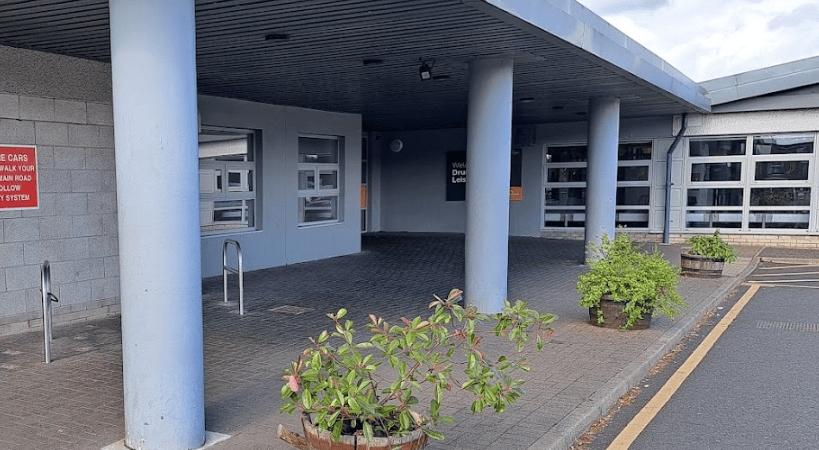
Here are the main things to think about – think of street design in three layers: movement, safety, and placemaking. Planters can play a role in all three.
1. Movement and Flow
- Pavements and crossings: Place smaller planters (waist-height, narrow) near pedestrian crossings or pavement corners.
2. Safety
- Traffic calming: Large, robust planters can be used as physical barriers to slow cars on cut-through streets. The Edinburgh Council sometimes approves them as part of “modal filters.”
- Visibility: Don’t place planters directly at junction corners where they could block sightlines. Keep a clear “splay” of about 2m for safety.
- Pavement width: Only add planters where there’s at least 2m of pavement left for wheelchairs and prams after the planter is installed.
3. Placemaking and Community Feel
- High Street: Bright, colourful planters outside shops and bus stops can encourage dwell time. These work best in clusters (3–5 planters rather than singles).
- Pocket spaces: In wide areas of pavement (outside libraries, churches, schools, or community noticeboards), use larger tubs or troughs to make “mini-gardens.”
- Entrances to areas: Use hanging baskets and pole planters at the start of main streets (e.g., “Welcome to Corstorphine”) to create a strong identity.
Practical tips for Corstorphine :
- Outside the Co-op / Scotmid / Tesco: small groupings of planters where people wait.
- Bus stops along St John’s Road: planters on the pavement ends, not in the boarding space.
- Community hubs (schools, library, Kirk, health centre): larger raised planters for visibility, possibly with signage.
Here are several authoritative street-design and placemaking documents from the UK—many of which explicitly address the use of planters, street furniture, and how streets can be shaped for people.
Core National Guides
- Manual for Streets (England & Wales, 2007) — The foundational guidance on designing people-centric streets. It specifically notes that raised planters and other street furniture can act as effective physical deterrents to footway parking and help indicate pedestrian areas (GOV.UK, Wikipedia).
- Manual for Streets 2: Wider Application of the Principles (CIHT, 2010) — Builds on the first Manual, extending its design philosophy to busier streets and urban contexts (CIHT, Wikipedia).
- Designing Streets: A Policy Statement for Scotland (Scottish Government, 2010) — The Scottish equivalent of Manual for Streets, which emphasises that “street design must consider place before movement” (Glasgow City Council).
- Streets for a Healthy Life (Homes England, 2022) — A companion to the Building for a Healthy Life toolkit, illustrating how residential streets can be made healthier, greener, and more people-oriented. It supports the five street functions derived from Manual for Streets, including ‘place’ and ‘movement’—all relevant to planter placement (GOV.UK).
- National Design Guide (UK Government, 2021) — Sets overarching principles for creating high-quality places, including aspects such as nature, public spaces, and movement—all of which can be informed by thoughtful use of greenery and placemaking interventions like planters (GOV.UK).
Local & City-Level Guidance
- Edinburgh Street Design Guidance — Offers detailed guidance on footways. (Edinburgh City Council).
- City of London Public Realm Technical Manual — Offers detailed guidance on surface materials, street furniture, planting and planter beds, and irrigation. Excellent for practical, context-aware planter integration (City of London).
- Streetscape Guidance (TfL, 2022 Revision 2) — Sets a high standard for London’s streets and places; while not planter-specific, it provides framing design principles that planter use should align with (TfL Content).
- Southwark Streetscape Design Manual (2024) — Emphasises durable, sustainable street design, re-generating ecosystems and supporting vibrant street activity—planting is central to this vision (Southwark Council).
- Oxfordshire Street Design Guide — Advocates for “streets” as places, not just roads. References key guides like Manual for Streets and encourages integrating tree planting, street furniture, and amenity-focused design into new developments (Oxfordshire Council).
- Suffolk Design Street Guide (2022) — Aligns with national design trends, including street elements like cycleways, footways, and by implication, planting strategies (Suffolk County Council).
Legal & Traffic Context
Traffic Signs Manual – Build-outs and planters (DfT) — Advises that, when installing planters in build-outs, the planter itself can serve as a visual cue, but may still require reflective elements or signs for safety (GOV.UK).
Summary Table
| Document | Focus / Relevance |
|---|---|
| Manual for Streets (MfS1) | Pedestrian-focused design; planters as deterrents to footway parking |
| Manual for Streets 2 (MfS2) | Extends MfS1 principles to busier urban streets |
| Designing Streets (Scotland) | Technical details on planter beds, furniture, and surface materials |
| Streets for a Healthy Life | Integrates street functions—place, movement, nature—into residential design |
| National Design Guide | Wider place-making principles—nature, public spaces, identity, movement |
| City of London Technical Manual | Technical details on planter beds, furniture, surface materials |
| TfL Streetscape Guidance | Best-practice design for London streets and public realm |
| Southwark Streetscape Manual | Sustainability and low-carbon street design with ecosystem focus |
| Oxfordshire Street Design Guide | Integrates planting into comprehensive development-scale street design |
| Suffolk Design Street Guide | Aligns local design with national best practices, including amenity elements |
| LTN Implementation (Gov.uk) | Legal and maintenance implications of using planters and barriers in traffic filtering |
| Traffic Signs Manual (Build-outs) | Visual/delineation requirements around planters in traffic calming treatments |
 Corstorphine in Bloom