Here’s the short version of what Edinburgh’s planning guidance will generally let you do for sponsor recognition on small flower tubs/planters—and what to avoid.
Full document EDINBURGH PLANNING GUIDANCE: OUTDOOR ADVERTISING AND SPONSORSHIP
What’s usually allowed (and how to do it)
- Treat it as “sponsorship recognition,” not advertising. Recognition should be on or immediately next to the item sponsored (i.e., fixed to the tub/planter or its frame), discreet in size, high-quality, and well-related to its surroundings. Aim for the minimum size needed to identify the sponsor.
- One sign per sponsored item. Don’t add extra posts or panels; use existing fabric (the planter itself) to avoid new street clutter.
- Keep materials and design tidy and durable. The Council expects high-quality materials and no clutter; design should integrate with the streetscape.
- Mind safety/obstruction. Site plaques so they don’t obstruct pedestrian or cycle routes (no protrusions into walking lines) and don’t conflict with road signs or crossings.
Where and when it’s acceptable
- Commercial streets and non-sensitive settings are more suitable for small-format displays on street furniture (which includes items like litter bins, shelters, and by analogy, small planters), provided they don’t harm character or pedestrian safety.
What to avoid (likely to be refused)
- Extra freestanding signs: free-standing small advertising panels are not supported unless there are exceptional circumstances. Use the tub itself.
- Sensitive areas: be very cautious in conservation areas/World Heritage Site or near listed buildings/designed landscapes—additional street furniture/advertising that adds clutter or affects character is unlikely to be supported. (Parts of Corstorphine are a conservation area, so keep plaques especially discreet.)
- Residential side streets that are otherwise free of adverts—introducing signage here is discouraged.
- Digital/illuminated or moving content: moving/flashing images (anything changing more often than every 5 seconds) and bright illumination near traffic signals raise safety/amenity issues—stick to non-illuminated, static plaques.
- A-boards: There’s a city-wide ban on temporary on-street A-boards under separate legislation.
Consents & process (practical steps)
- Consent may be needed. Many adverts need express advertisement consent unless they fall under “deemed consent.” Because planter plaques are site-specific and in public view, check with Planning before installing—especially in conservation areas or near listed buildings (you might also trigger listed building consent if attaching to listed fabric, which you should avoid).
- Prepare a light-touch justification if asked: show that the plaque is minimal, on the sponsored item, high-quality, and doesn’t add clutter or obstruct movement.
A simple “safe” spec for your tubs
- Plaque size: just big enough for “Sponsored by [Name/Logo]”; keep logos small.
- Placement: fixed flush to the planter (no posts), low on the face that doesn’t protrude into footfall.
- Finish: etched metal or engraved recycled plastic; matte, non-reflective.
- Copy: sponsor name/logo only (no promos, arrows, or calls-to-action).
- Count: one plaque per tub.
All points above are drawn from the City of Edinburgh Council’s Outdoor Advertising and Sponsorship Planning Guidance (2019).
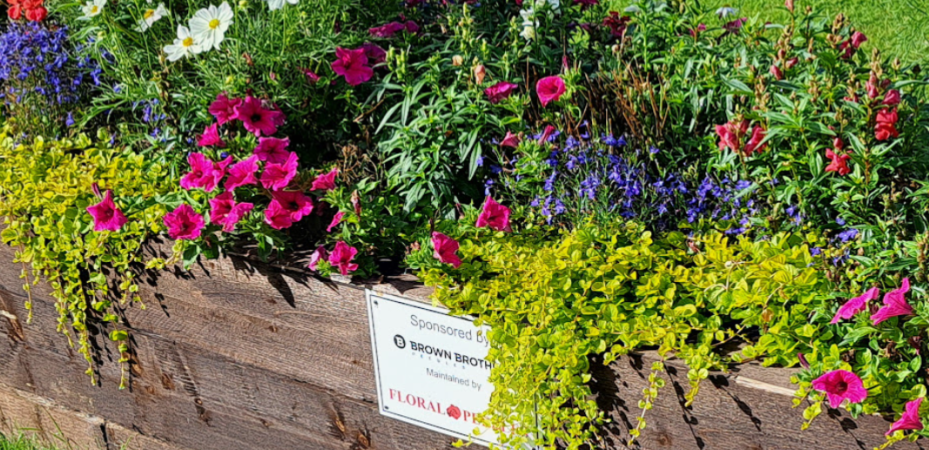
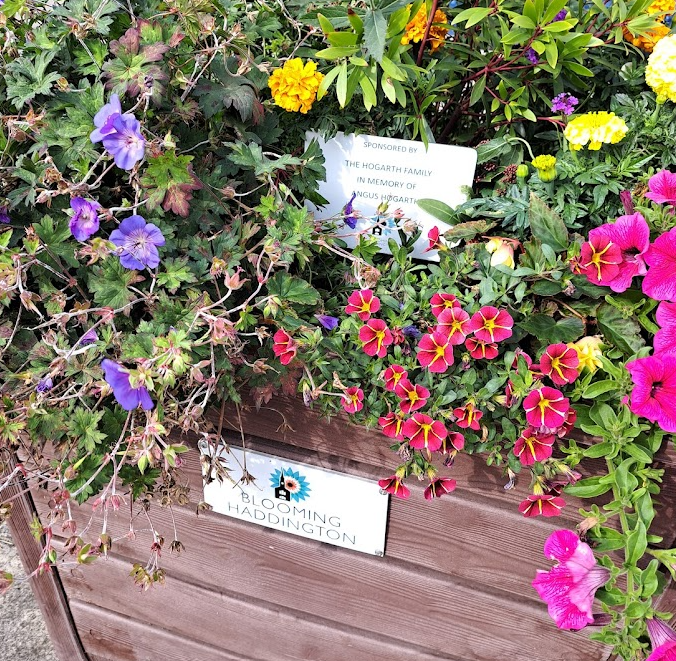
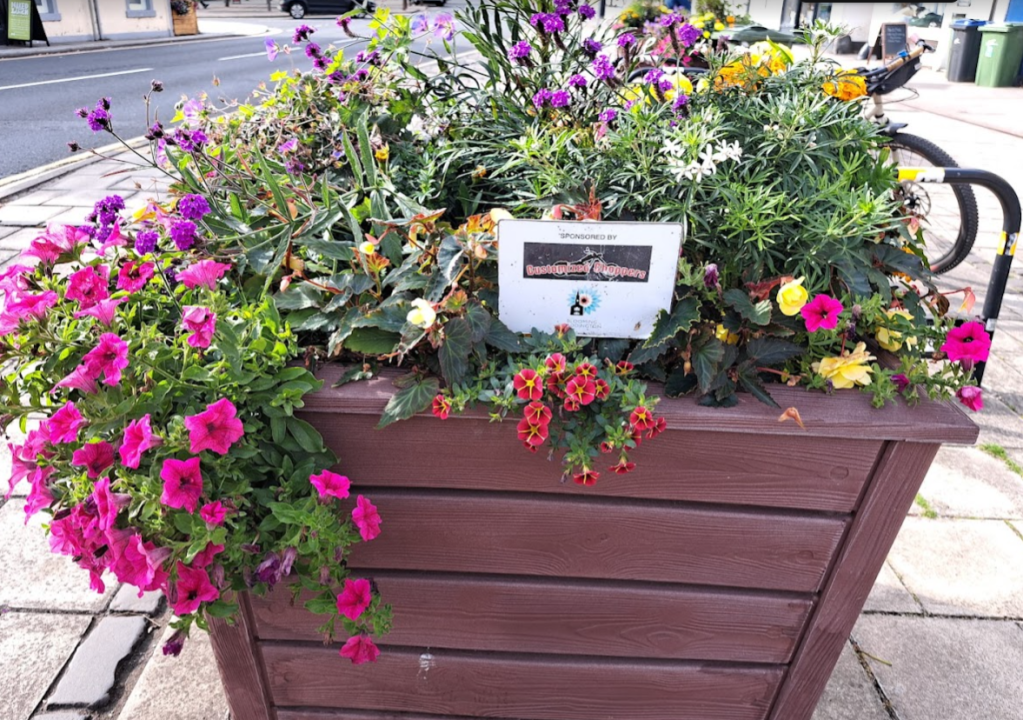
Examples of Signage in Other Towns
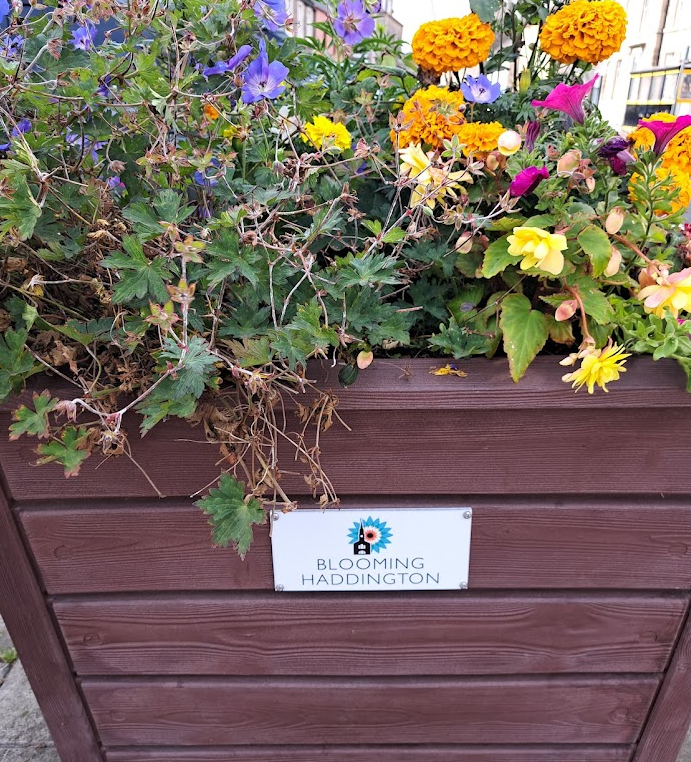
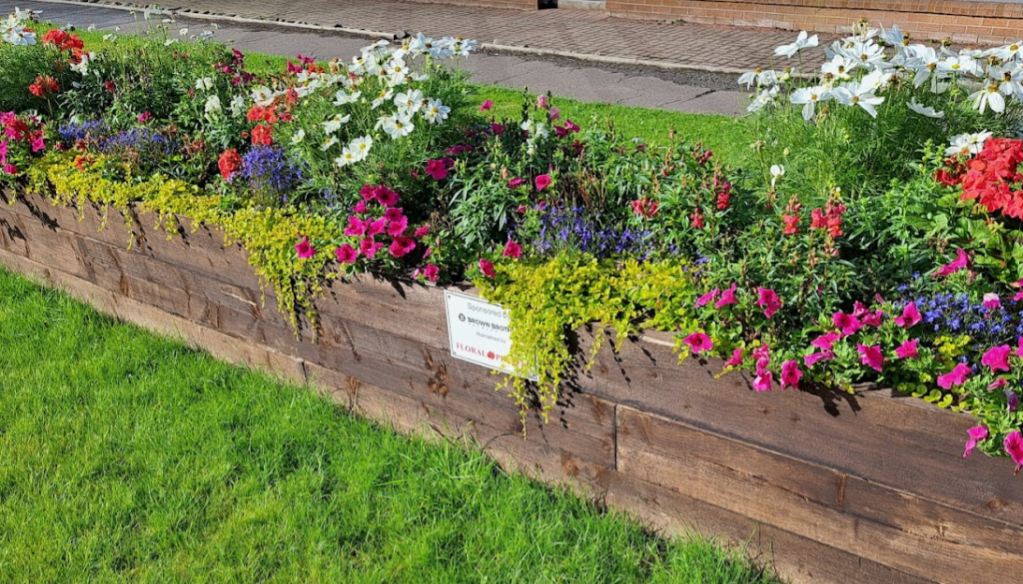
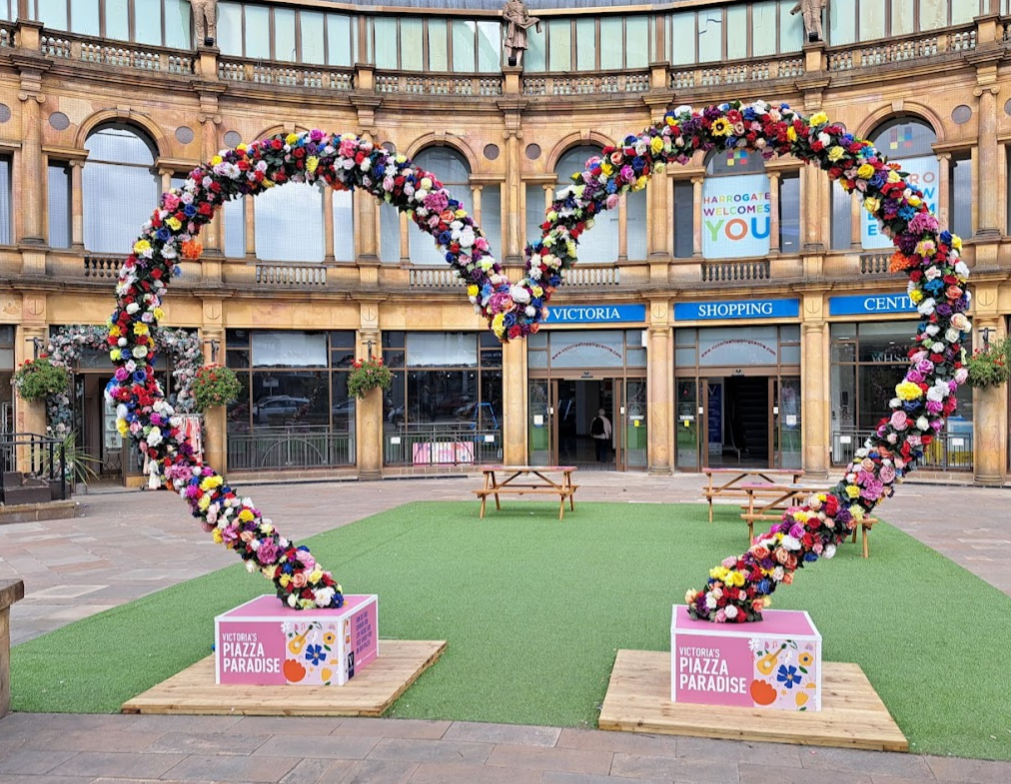
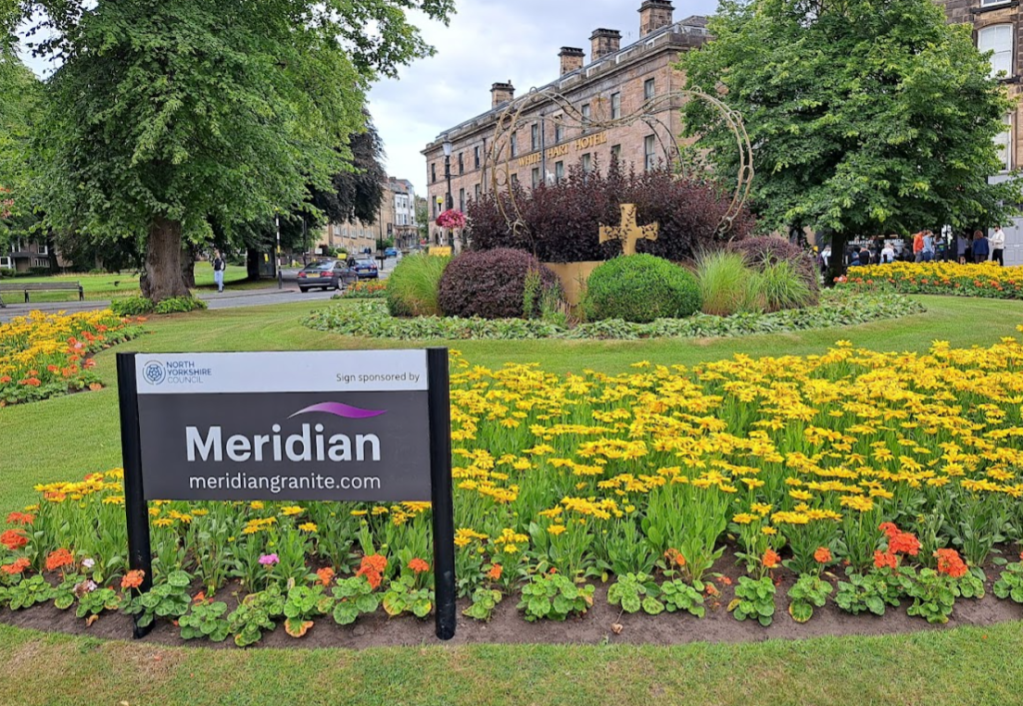
 Corstorphine in Bloom
[…] Sponsorship Signs […]
LikeLike