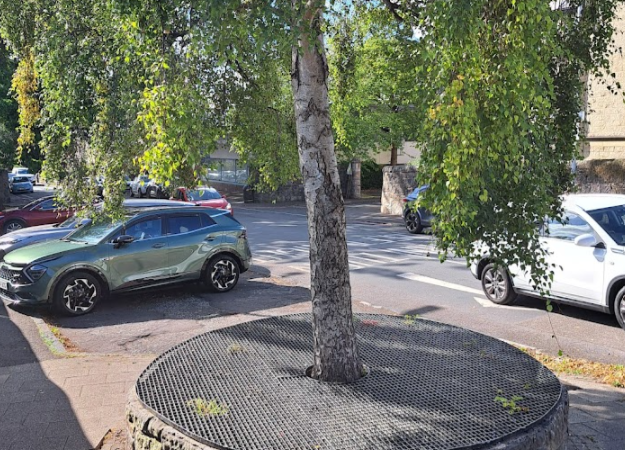
Sustainable Drainage Systems (SuDS) street trees manage rainwater through interception, transpiration, and infiltration, using specialized planting systems like tree pits, trenches, swales, and rain gardens that require specific design and maintenance
Here is the council policy document Suds Trees in Streets
1. What are SuDS Trees?
A SuDS tree is planted as a functioning part of an engineered drainage system. They look visually similar to typical street trees but differ below ground in a specialized design to collect, store, and treat surface water (rainwater) runoff.
SuDS trees contribute to surface water management through:
- Interception – The canopy slows and reduces rainfall.
- Transpiration – Water is absorbed by the roots and evaporated through the leaves.
- Infiltration – Increases the volume and rate of surface water moving into the soil.
2. Types of SuDS Systems
SuDS trees can be implemented in different formats, all of which require good infiltration or underlying drainage to prevent waterlogging:
- SuDS Tree Pits and Trenches: Used in hard-landscaped or paved areas. They utilize engineered soils, a drainage layer, and may include root support structures. Trenches are continuous connected underground structures for a row of trees.
- Swales and Rain Gardens (Bioretention Areas): Linear planted features often in a soft landscape, accommodating trees, shrubs, and perennial groundcover. Rain gardens are typically free-draining with only brief periods of waterlogging.
3. Key Design and Specification
The survival and effectiveness of a SuDS tree depend on the initial design and species selection.
- Design Considerations: Must include determining existing drainage, rainfall volumes, location of utilities, and provisions for overflow during extreme weather events.
- Soil: Requires an appropriate volume of fertile, uncontaminated, free-draining engineered soil.
- Species Selection: Trees in SuDS tree pits and trenches must be robust, pollution-tolerant, and able to adapt to sudden changes from very dry to very wet conditions. Species that produce high amounts of allergenic pollen are not acceptable as street trees in Edinburgh.
4. Maintenance
The maintenance for established SuDS trees is similar to conventional urban trees, with the addition of checks on drainage components.
- Tree Pits/Trenches: Require checks and clearing of water inlets and soil aeration vents (six-monthly), clearing leaf debris (annually), and cleaning filter media (bi-annually).
- Bioretention Areas: Require regular inspection (3-6 monthly), removal of litter/leaf debris (3-12 monthly), and management of vegetation, including removal of invasive species (six-monthly).
- Establishment Period: The contract maintenance period after construction for all SuDS elements should be 5 years. New trees require regular watering in dry periods during the 2-5 year establishment period.
 Corstorphine in Bloom