
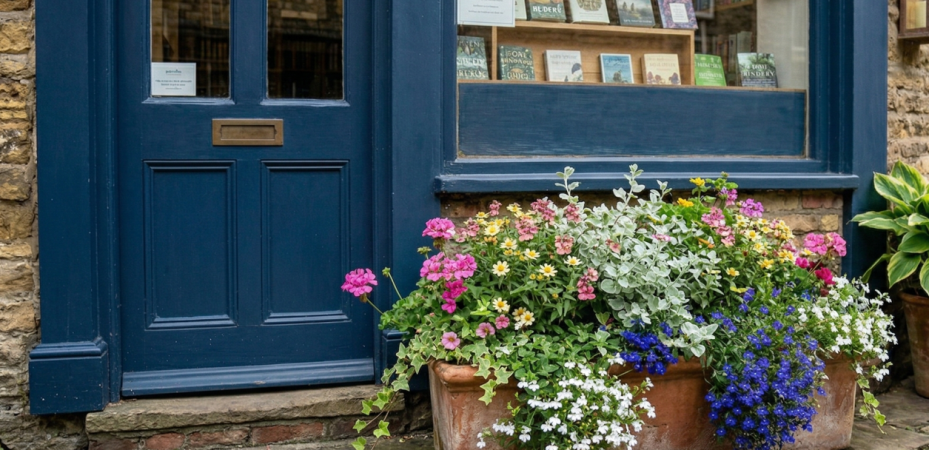
1. The “Turnkey” Model (Aberdeen City Council)
Aberdeen operates a highly structured “Inward Sponsorship” system where the council retains almost all legal and maintenance control, and the business simply pays for the privilege.
- Legal Ownership: The council explicitly states that even if a business pays for the planter, it becomes property of the council the moment it is installed.
- Liability: Because the council installs and maintains the planters, the council’s own Public Liability Insurance typically covers the risk, removing the legal burden from the business.
- Commercial Terms: Agreements for under £1,000 are handled via a simple exchange of letters, while those over £1,000 require a full legal contract.
- Branding: Branding is strictly regulated; for example, they allow the business name on the container but forbid plaques on trees for “maintenance and visual reasons.”
2. The Third-Party Partnership Model (Glasgow City Council)
Glasgow often uses a “Middle-Man” approach to manage the legalities of street greening, frequently partnering with organizations like Trees for Streets.
- The Buffer: By using a third-party charity to manage sponsorships, the council creates a legal “buffer.” The charity handles the initial application and crowdfunding, while the council provides the “Technical Approval” for the location.
- Legal “Wish List”: Glasgow (and similarly Perth & Kinross) uses a “Community Benefits Wish List.” This allows businesses to “adopt” or sponsor greening projects as part of their CSR (Corporate Social Responsibility) requirements when bidding for other council contracts.
- Enforcement: This model is legally cleaner for the council because the “sponsor” is technically donating to a charity project rather than “obstructing” the road themselves.
3. The Ethical & Political Filtering Model (West Lothian & Highland Councils)
These councils focus heavily on the reputational legalities of sponsorship to avoid “impropriety.”
- The “Prohibited” List: Their policies explicitly bar sponsorships from businesses involved in:
- Tobacco, gambling, or payday loans.
- Political parties or pressure groups.
- Organizations in “Legal or Financial Conflict” with the council (e.g., a business currently suing the council or with massive unpaid business rates).
- Regulatory Separation: A key legal rule in West Lothian is that sponsorship must not influence regulatory decisions. For example, a business cannot sponsor a planter in front of their shop to “soften” the council’s stance on a pending planning application for a new extension.
4. “Community Wealth Building” model (Fife Council )
While most councils treat sponsored planters as simple advertising, Fife integrates them into a broader strategy of social and environmental grants. Here is exactly how they handle things differently:
1. The “Consolidated” Grant System
Fife recently stopped running separate grant schemes for things like “Floral Enhancement” and “Community Events.” Instead, they consolidated these into the Local Community Planning Budget.
- How it works: Rather than a business paying the Council directly to put up a planter, the Council encourages community groups to apply for a grant from this central pot.
- The Benefit: This allows the group (like a “Friends of” or Community Council) to own the project legally. The business then “tops up” the grant or sponsors the maintenance, which is legally simpler than the business trying to rent pavement space from the Council.
2. “Community Benefits” in Procurement
Fife is very proactive with Community Benefit Clauses. When the Council hires a large contractor (e.g., for roadworks or building a school), the contract legally requires that contractor to give something back to the community.
- The Portal: Fife has a unique Community Benefit Request Form. Community groups can list exactly what they need—such as “10 large timber planters for the High Street”—and the Council matches these needs with contractors who are looking to fulfill their social obligations.
- The Result: This means a community group might get their planters for free, fully installed by a professional firm, with the “legal” side handled as part of the Council’s main construction contract.
3. Professional Roundabout & Bin Sponsorship
For high-visibility commercial sponsorship, Fife uses professional partners like ClearChannel or Roadvert.
- Liability: By using these agencies, the Council shifts the legal risk. The agency holds the massive Public Liability insurance, and the business pays the agency, not the Council.
- Standardization: This ensures that every sponsored sign or planter meets a specific safety “crash rating” and doesn’t distract drivers, which is a common legal concern under the Roads (Scotland) Act.
4. Climate Action Fife & Edible Spaces
Fife is pushing a “Climate Grant” model ($£500$ to $£5,000$) that encourages edible planters rather than just decorative flowers.
- The Legal Twist: Because these planters involve food (herbs, vegetables), the legal agreements often include clauses about soil quality and public health. They partner with the Fife Communities Climate Action Network (FCCAN) to provide peer-to-peer legal and safety support for groups doing this for the first time.
 Corstorphine in Bloom