
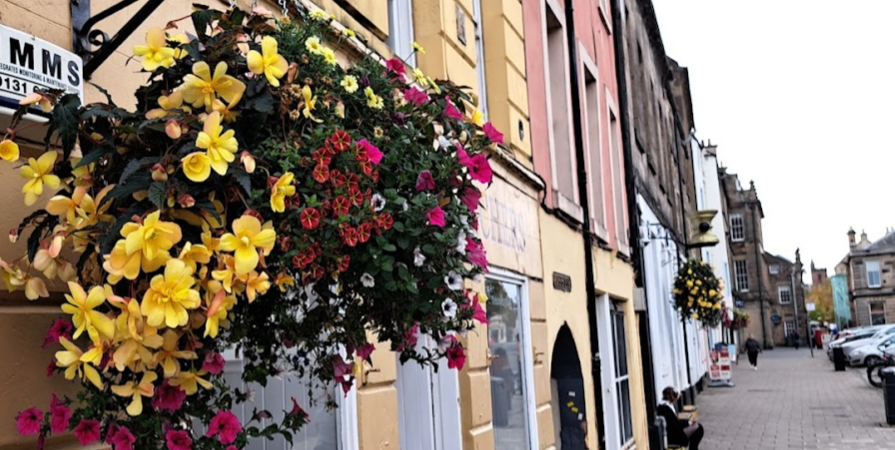
(Adapted for Corstorphine in Bloom)
Purpose
Run a colourful, heritage‑flavoured sponsored planter trail with year‑round planting to drive footfall, local pride, and funding.
Core Components
- Trail format: 25–50 decorated planters/wheelbarrows at shops, schools, parks, and civic sites. Each has a number, QR code, sponsor credit, and short story.
- Theme ideas (pick one): “Corstorphine Through Time”, “Pollinators & Places”, “Green Corridors”, “Our High Street”.
- Voting: Public vote via QR form; paper ballots at library/shops.
- Map: Simple A4 map & Google Map layer; wayfinding window stickers.
- Access: Keep 1.5–2 m clear path; avoid trip hazards; short-cut edges along meadows.
High‑Level Timeline (example)
Feb–Mar – Confirm theme & dates; recruit sites/sponsors; apply for small grants (KSB/ELGT/ECCAN/CCF).
Apr – Order liners/compost/plants; design plaques, QR codes, posters; launch sponsor pack.
May – Planting week & judging (internal pre‑check).
Jun–Aug – Trail live (8–10 weeks); weekly social posts; mid‑season deadhead/top‑up.
Sep – Awards night & press; winter planting order.
Oct–Nov – Switch to winter/heritage displays; evaluate metrics.
Sponsor Pack (one page)
- Offer: £75–£250 per planter (tiered: Bronze/Silver/Gold) incl. nameplate, social shout‑outs, map listing, photo.
- What they provide: Site permission (if on their frontage), water access or watering rota contact.
- What we provide: Planter/wheelbarrow, compost, plants, design help, plaque, QR code, inclusion on map & press.
- Add‑ons: “Adopt a bed” (£300–£600); “Team planting day” (£150).
- Payment: Via Community Council ring‑fenced account; invoice + receipt.
Judging & Awards
- Categories: Best Planter; Best Wheelbarrow; Best Heritage Story; People’s Choice; Best School/Youth; Sustainable Planting.
- Criteria (10 pts each): Impact/colour; condition/care; sustainability (peat‑free, pollinator plants); story/interpretation; accessibility (no obstructions, tidy edges).
- Panel: 3 judges (horticulture, heritage, community).
Communications Kit
- Launch post: “Sponsor a planter & put your business on the map!” + link to sponsor form.
- Countdown posts: Behind‑the‑scenes, school builds, heritage snippets.
- Map reveal: Carousel of clusters; press release to local papers & council channels.
- Weekly rhythm: 1× volunteer shout‑out; 1× sponsor spotlight; 1× planter of the week; 1× pollinator tip.
- On‑street: A3 trail posters; window stickers; shop till‑slips with QR code.
12‑Month Planter Calendar (peat‑free, pollinator‑friendly)
- Jan–Feb: Prep & repairs; order summer stock; winter pansy/viola/cyclamen hold colour.
- Mar: Bulbs peaking; prune, feed, mulch; sow hardy annuals for reserve.
- Apr–May: Plant summer scheme (calibrachoa, pelargonium, verbena, salvia, fuchsia, helichrysum; add herbs for scent).
- Jun–Aug: Deadhead weekly; liquid feed fortnightly; top up compost; check watering rota.
- Sep: People’s Choice close; lift/tidy; start winter switch.
- Oct–Nov: Plant winter scheme (viola, skimmia, heather, carex, cyclamen) + spring bulbs (tulip, narcissus, muscari).
- Dec: Festive wraps/ribbons; sponsor thank‑yous; next‑year letters.
Roles & Rotas (small, doable jobs)
- Site lead (per cluster of 5–10): WhatsApp check‑ins, watering rota.
- Planting squad: 4–6 people for each planting day (2–3 hours).
- Comms lead: Weekly posts; press releases; photo bank.
- Sponsor liaison: Invoices, plaques, map updates.
- Accessibility checker: Paths, heights, tidy edges; log fixes.
Budget (per planter – indicative)
- Hardware: Wheelbarrow/planter £0–£60 (donated/repurposed/IBC half)
- Compost & mulch: £12–£18
- Plants (summer or winter): £18–£35
- Plaque + QR: £6–£12
- Contingency: £5
Total: ~£35–£95 (cover via sponsor tiers; surplus funds winter scheme.)
Permissions & Risk
- Get written OK for any public‑realm siting (Council/landowner).
- Keep clear access (1.5 m), avoid junction sightlines; secure planters; no sharp fixings.
- Water management: spill mats; avoid trip hoses; dusk watering.
- Insurance via Community Council; volunteer briefing & gloves.
Metrics (report to Council/sponsors)
- Inputs: Volunteers (people × hours), sponsorship £, number of planters.
- Outputs: Footfall on map (QR scans), social reach, press hits, % planters maintained on schedule.
- Outcomes: Resident survey (pride/beauty), pollinator counts at 5 sample sites, litter reduction around planters.
Contact & Next Steps
- Agree theme & dates 2) Publish sponsor form 3) Recruit 50 sites 4) Book planting week 5) Press launch & map reveal.
 Corstorphine in Bloom