
What is the Edinburgh Nature Network (ENN)?
The ENN is the city’s plan to join up parks, woodlands, rivers and streets into a connected “nature network” so wildlife can move and people can enjoy greener neighbourhoods. It focuses on practical, nature-based fixes (like meadows, hedges and wetlands) that also help with climate, flooding, air quality and wellbeing. (Thriving Greenspaces)
You can explore the official ENN map online and zoom into your area to see the proposed opportunities and actions. (ArcGIS Experience)
Why it matters to residents
- Cleaner air & cooler streets: trees and meadows help with air quality and summer heat. (Thriving Greenspaces)
- Less flooding: restoring streams and adding wetlands slows and stores rainwater. (Thriving Greenspaces)
- More nature on your doorstep: connected habitats mean more birds, bees and blossom where we live. (Thriving Greenspaces)
- A better everyday walk: small green links between bigger spaces make local walks and cycles nicer and safer. (Thriving Greenspaces)
The ENN sits within the Council’s Edinburgh Living Landscape partnership, which is all about “nature in your neighbourhood.” (The City of Edinburgh Council)
What’s being done in Corstorphine
The Corstorphine area sheet in the ENN identifies eight local actions. Highlights include
- Protect our big woods and meadows at Corstorphine Hill and Ravelston Woods (PR027, PR028).
- Restore streams and add wetlands on Corstorphine Hill to reduce surface-water flooding (RE021).
- Create green corridors that link:
- Corstorphine Hill → Water of Leith via Saughton/Roseburn (CO019),
- Stepping-stones via nearby schools and open land (CO020),
- Davidson’s Mains Park → Cammo → River Almond (CO021),
- Better woodland links across the golf courses to Ravelston (CO022).
- Wildlife-friendly gardens across our streets (hedgehog holes, mini-meadows, less paving) (EN043).
You can also read about Corstorphine Hill as a Local Nature Reserve and see visiting info here. (edinburghoutdoors.org.uk)
How Corstorphine in Bloom fits in
Corstorphine in Bloom can help turn the ENN map into on-the-ground action by:
- Pollinator planters & pocket meadows (CO019/CO020): place nectar-rich planters and small meadow patches along “missing links” between the Hill, parks, schools and Water of Leith. (Think gateways at path entries, traffic-calming islands, and sunny verges.)
- Native hedges & street trees (CO021/CO022): work with residents, schools and landowners (including golf courses) to plant hedges or small native tree groups that stitch green spaces together.
- “Wildlife-friendly gardens” drive (EN043): a simple local pledge—cut a hedgehog hole in the fence, swap a bit of lawn for flowers, reduce hard paving. Provide seed packs and how-to leaflets.
- Rain-friendly planting (RE021): support the Council/Natural Heritage Service by adding rain-gardens and wet-loving plants where run-off causes problems near paths.
- Community links: team up with Friends of Corstorphine Hill and nearby schools to run seasonal planting days, wildlife counts, and guided walks that follow the future corridor routes. (F.O.C.H.)
Read More on the Edinburgh Nature Network
How to get involved
- See the map: look up your street on the ENN Opportunity Map and spot the “gaps” we can fix together. (ArcGIS Experience)
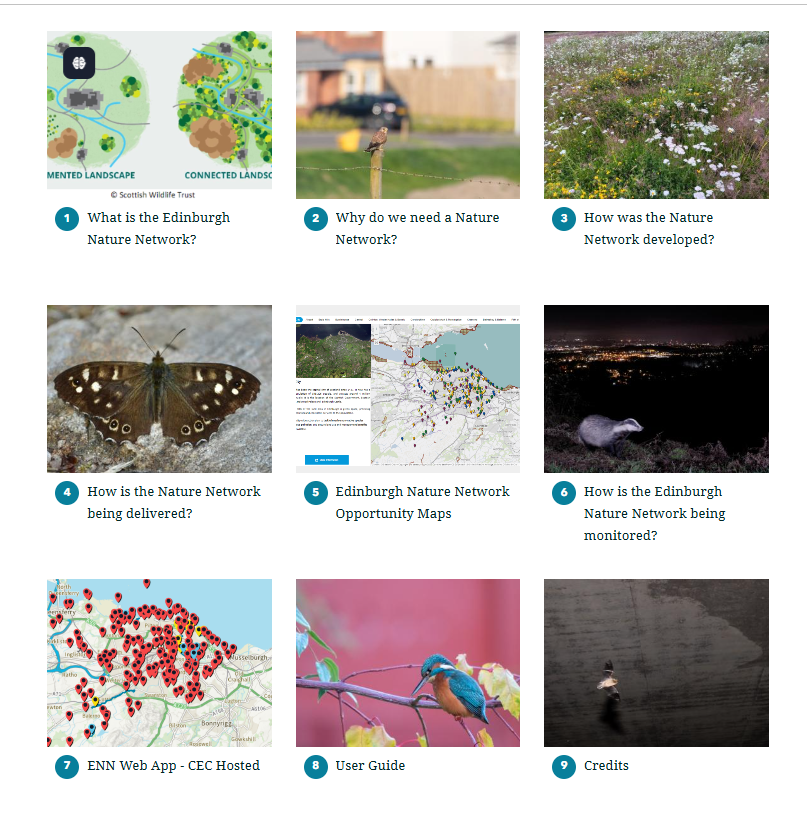
- Read more: short posts on how ENN is monitored and delivered, plus a practical guide drawn from Edinburgh’s experience. (Edinburgh Living Landscape)
- Local info: Corstorphine Hill LNR page (access, features) and the Friends group for volunteering. (edinburghoutdoors.org.uk)
- About the programme: Edinburgh Living Landscape—“nature in your neighbourhood.” (The City of Edinburgh Council)
 Corstorphine in Bloom